
Home / Luxury Assets / Luxury Accessoires / The Alternative Assets Billionaires Are Buying Right Now
The Alternative Assets Billionaires Are Buying Right Now: The Quiet Wealth Shift Happening Behind the Scenes
While most investors are still debating stocks, real estate, and cryptocurrencies, the world’s wealthiest individuals are quietly moving billions into a different class of assets. These investments rarely make headlines, yet they are increasingly becoming the preferred wealth-preservation and wealth-expansion tools of modern billionaires.
Why Billionaires Are Looking Beyond Traditional Investments?
For decades, the wealth-building formula seemed straightforward: own businesses, buy real estate, invest in public markets, and hold a diversified portfolio. But today’s ultra-wealthy face a different challenge. The question is no longer how to become rich. The question is how to preserve purchasing power, protect capital from inflation, reduce correlation with stock market volatility, and position wealth for the next generation. This has created a massive shift toward alternative assets.
Alternative assets are investments that exist outside traditional stocks, bonds, and cash. They often have limited supply, unique characteristics, and can generate returns that behave differently from public markets. What makes them especially attractive is scarcity. When billions of people can buy a stock, competition becomes intense. When only a handful of individuals can access a rare asset, opportunities become much more interesting.
The wealthiest investors understand a principle that most retail investors overlook:
The greatest fortunes are often built where competition is lowest.

For many billionaires, fine art is no longer simply a status symbol. It has become a serious financial asset. Masterpieces and blue-chip contemporary works have increasingly attracted wealthy buyers who view art as a store of value similar to gold, but with additional prestige and cultural significance.
Collectors are seeking:
– Museum-quality paintings;
– Historically important works;
– Rare sculptures;
– Emerging artists with global demand;
– Limited-edition masterpieces.
The most sophisticated buyers aren’t merely purchasing artwork. They’re buying:
– Scarcity;
– Cultural relevance;
– Global demand;
– Legacy.
Unlike stocks that can be diluted through new issuance, a masterpiece created decades ago cannot be reproduced. Its supply remains permanently fixed. As wealth grows globally, competition for elite artwork continues to increase.

One of the most fascinating trends among wealthy investors is the growing interest in agricultural land. Farmland possesses several characteristics billionaires love:
– It produces income:
Farmers lease land and generate ongoing cash flow.
– It benefits from population growth:
More people require more food.
– It has tangible value:
Unlike many financial assets, farmland produces something essential to human survival.
– It resists inflation:
Food prices often rise during inflationary periods, helping farmland maintain value.
The world’s best agricultural regions are becoming increasingly difficult to acquire. Many wealthy families are accumulating farmland with time horizons measured not in years, but in generations. Some investors view premium farmland as the modern equivalent of owning strategic real estate in major cities a century ago.

Twenty years ago, most people viewed luxury watches as expensive accessories. Today, many collectors see them as alternative investments. The market for rare timepieces has expanded dramatically.
Particularly desirable are:
– Limited production models;
– Discontinued references;
– Vintage pieces in exceptional condition;
– Watches with historical significance;
– Highly collectible independent brands.
What attracts billionaires? Portability.
A watch worth hundreds of thousands — or even millions — can fit on a wrist.
Unlike real estate, it requires minimal maintenance.
Unlike businesses, it requires no employees.
Unlike stocks, it carries emotional and aesthetic value.
The best examples combine craftsmanship, rarity, heritage, and global demand.

Many billionaires increasingly prefer private companies over public ones. The reason is simple. A significant portion of economic growth now occurs before companies ever reach public markets. Private equity allows wealthy investors to acquire ownership stakes in businesses that remain inaccessible to ordinary investors.
Benefits include:
– Greater influence over operations;
– Potentially higher growth;
– Reduced short-term market pressure;
– Access to emerging industries.
Many of today’s most successful businesses spend years — or even decades — remaining private. For sophisticated investors, the private market has become a major source of wealth creation.

Collectors have transformed entire categories into investment markets. These include:
– Rare sports memorabilia;
– Historic documents;
– Vintage toys;
– Comic books;
– Limited-edition collectibles;
– Luxury handbags;
– Rare musical instruments.
What drives value? Emotion.
Traditional finance often ignores emotional demand. Yet people routinely pay extraordinary premiums for items connected to nostalgia, history, achievement, or personal passion. When emotional attachment combines with limited supply, prices can rise dramatically. Billionaires understand that human desire is one of the strongest economic forces in existence.
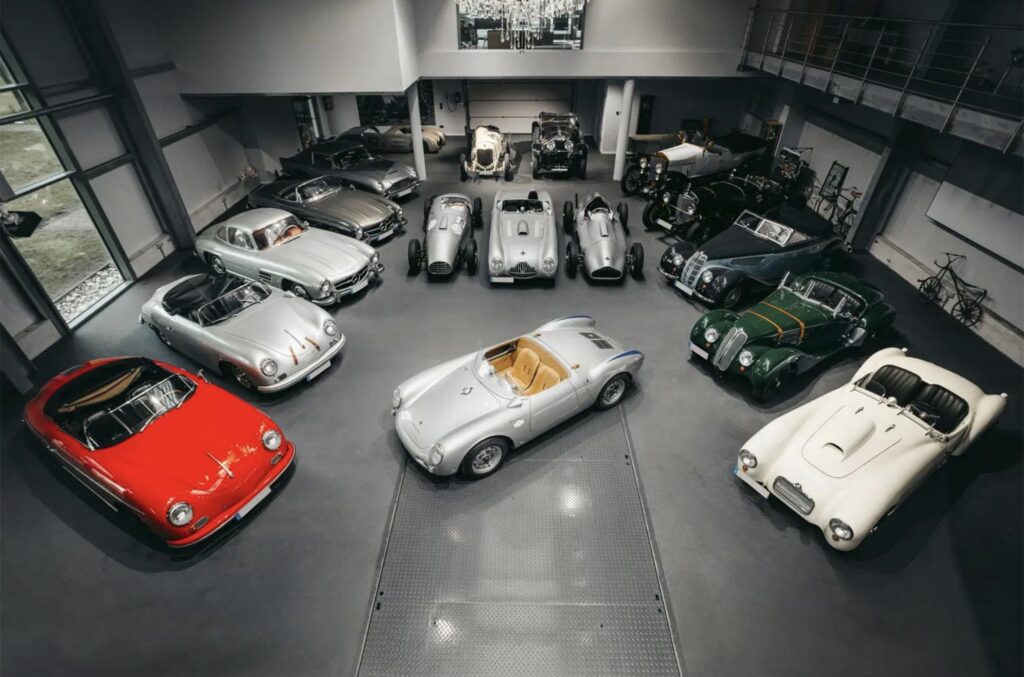
Certain automobiles have evolved far beyond transportation. They are now viewed as rolling pieces of history. The most sought-after vehicles typically possess:
– Historical significance;
– Exceptional rarity;
– Original condition;
– Racing heritage;
– Strong collector demand.
Unlike many investments, classic cars provide an experience. Owners can display them, drive them, exhibit them, and enjoy them while potentially benefiting from appreciation. This blend of passion and investment potential makes them uniquely attractive.

Wine investment has quietly matured into a sophisticated asset class. The best bottles become rarer every year.
Why?
Because people drink them.
Every bottle consumed permanently reduces supply.
This creates a naturally shrinking market.
Wealthy collectors focus on:
– Prestigious vineyards;
– Exceptional vintages;
– Proven auction demand;
– Perfect storage history.
The same principle applies to rare whiskey, cognac, and other premium spirits. Some collections are now worth millions of dollars and continue attracting international buyers. Scarcity becomes more powerful when inventory literally disappears over time.

A growing number of billionaires are investing in assets linked to experiences rather than products.
Examples include:
– Boutique resorts;
– Private island developments;
– Luxury wellness retreats;
– Exclusive members-only clubs;
– High-end travel experiences.
Why?
Consumer behavior is changing. Many affluent individuals increasingly prioritize experiences over possessions. This trend has created new opportunities for investors who recognize where premium spending is heading. Luxury experiences often command high margins while benefiting from global demand.

One of the least discussed billionaire investments involves infrastructure supporting the digital economy. This includes:
– Data centers;
– Fiber networks;
– Cloud infrastructure;
– Artificial intelligence facilities;
– Digital storage systems.
Unlike glamorous assets such as art or yachts, these investments operate largely behind the scenes. Yet modern civilization depends on them. Every online search, video stream, AI query, financial transaction, and cloud service relies on infrastructure that most people never see. Many wealthy investors believe digital infrastructure may become one of the defining asset classes of the coming decades.

Perhaps the most underestimated alternative asset is intellectual property. This includes:
– Music catalogs;
– Patents;
– Trademarks;
– Publishing rights;
– Licensing agreements;
– Digital content libraries.
Intellectual property can generate revenue repeatedly without requiring constant reinvestment. A successful song may earn royalties for decades. A valuable patent can create income across entire industries. A globally recognized trademark can retain enormous value across generations.
The appeal is obvious:
Once created, intellectual property can continue producing cash flow while scaling worldwide.
The Emerging Alternative Asset Billionaires Are Watching Closely
The next wave of wealth creation may come from assets that are still largely overlooked. Forward-thinking investors are exploring:
AI Infrastructure
The rapid growth of artificial intelligence requires enormous computational resources. Those who own the infrastructure supporting AI may benefit from increasing demand.
Water Rights
Access to clean water is becoming increasingly valuable in certain regions. Long-term investors view water as one of humanity’s most essential resources.
Carbon Credits
Environmental markets continue evolving as governments and corporations pursue sustainability goals.
Digital Scarcity Assets
Not every digital asset will survive, but the concept of verifiable digital ownership continues attracting attention from sophisticated investors. The key is identifying genuine utility rather than speculation.
The Hidden Pattern Behind Every Billionaire Alternative Asset
At first glance, these investments appear completely unrelated. Art has little in common with farmland. Farmland has little in common with music royalties. Music rights have little in common with data centers. Yet they all share the same characteristics.
– Scarcity. There is limited supply.
– Demand. People consistently want them.
– Durability. They remain relevant over long periods.
– Wealth Protection. They help preserve purchasing power.
– Low Correlation. They often behave differently from traditional financial markets.
This is the common formula billionaires repeatedly follow.
They do not chase what everyone already owns.
They seek assets that become more valuable as scarcity increases.
What Everyday Investors Can Learn?
Most people cannot purchase a multimillion-dollar painting or acquire thousands of acres of farmland. But the lessons remain valuable. The world’s wealthiest investors consistently focus on:
– Long-term thinking;
– Scarcity;
– Quality;
– Tangible value;
– Durable demand.
Rather than constantly chasing trends, they search for assets capable of remaining desirable decades into the future. That mindset often matters more than the asset itself. The biggest fortunes are rarely built through short-term excitement. They are built through patience, ownership, and recognizing value before everyone else notices it.
Final Thoughts
A quiet transformation is taking place in global wealth management. While headlines focus on stock markets, cryptocurrencies, and economic uncertainty, many billionaires are steadily allocating capital toward alternative assets that offer scarcity, resilience, and long-term value.
From fine art and farmland to intellectual property and AI infrastructure, the common thread is remarkably simple:
Own something valuable that few people can access, and hold it long enough for demand to catch up with scarcity.
That principle has helped create some of the world’s largest fortunes — and it continues to shape where billionaire money is flowing right now.
The Smartest Billionaires Are Investing Beyond Traditional Wealth
The alternative assets you’ve just explored reveal an important shift happening among the world’s wealthiest investors. While stocks, bonds, and real estate remain important, many billionaires are increasingly allocating capital toward rare collectibles, luxury assets, private businesses, fine art, exclusive real estate, and opportunities that offer something traditional markets often cannot: scarcity.
From rare watches and collectible cars to private islands and trophy properties, these assets are often valued not only for their financial potential but also for their exclusivity, prestige, and long-term desirability. But here’s the truth…
The most fascinating part of billionaire investing isn’t simply what they buy — it’s how they think. Many of the world’s wealthiest individuals focus on acquiring assets that are difficult to replicate, difficult to access, and capable of remaining desirable for decades regardless of market cycles.
Continue exploring:
→ The Most Luxurious SUVs of 2026
→ Tiny Luxury Homes With Million-Dollar Views
→ Private Islands Owned by Some of the Richest People in the World
→ 15 Luxury Destinations Billionaires Are Choosing Instead of Dubai
→ Why Wealthy Collectors Are Paying Millions for These Rare Cars
Because the greatest fortunes are often built not by following trends, but by recognizing value long before everyone else sees it. Stay with us and discover more luxury investments, extraordinary assets, and elite lifestyles that reveal how the world’s wealthiest individuals preserve, grow, and enjoy their wealth.