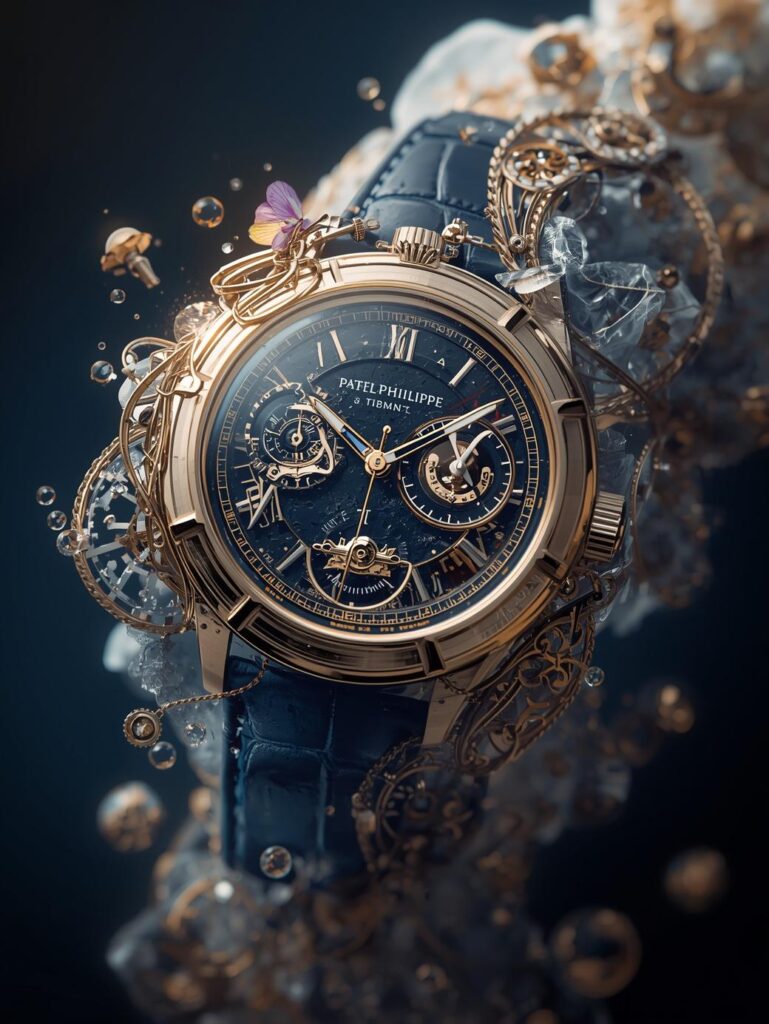
Luxury watches have long represented far more than a way to tell time. They symbolize craftsmanship, heritage, engineering excellence, and exclusivity. While smartphones can display the exact time instantly, the world’s finest mechanical watches continue to attract collectors willing to spend hundreds of thousands — or even millions — of dollars on a single timepiece.
The most prestigious watchmakers have spent generations perfecting traditional techniques while constantly pushing the boundaries of innovation. Every component, from microscopic gears to hand-polished bridges, reflects thousands of hours of meticulous work performed by highly skilled artisans.
Unlike many luxury products, exceptional watches often appreciate in value over time. Limited production numbers, historical significance, and extraordinary craftsmanship make them desirable investments as well as wearable works of art.
Here are five of the world’s most expensive watch brands that continue to define the highest level of Swiss and German horology.
Rolex
5. Rolex – The Most Recognizable Luxury Brand
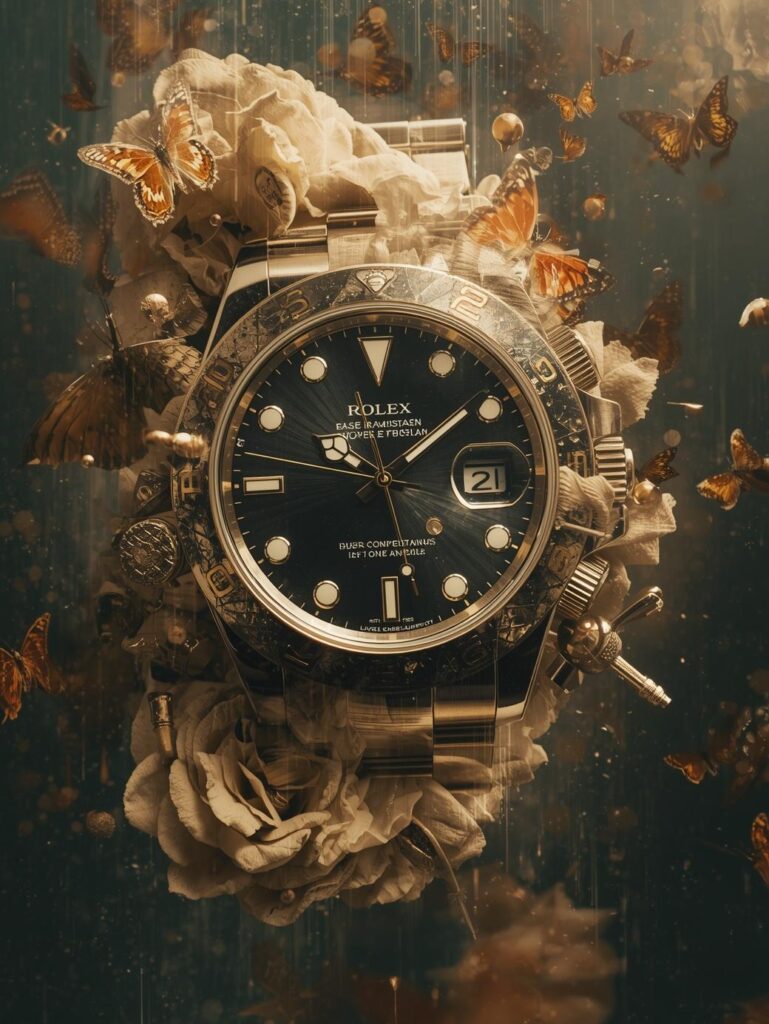
For many people, Rolex is the first name that comes to mind when discussing luxury watches. Founded in London in 1905 before relocating to Geneva, Switzerland, Rolex transformed the watch industry by creating timepieces that combined durability, precision, and timeless elegance.
Today, Rolex is one of the most recognizable luxury brands in the world, yet demand still far exceeds supply. Many of its most popular models have waiting lists stretching for years, making them even more desirable on the secondary market. Unlike many manufacturers that produce watches in larger quantities, Rolex controls nearly every aspect of production internally. The company casts its own gold alloys, manufactures its own movements, creates proprietary ceramic bezels, and subjects every watch to rigorous testing beyond official Swiss chronometer standards.
The brand pioneered several groundbreaking innovations that have become industry standards. The Oyster case, introduced in 1926, was the world’s first waterproof wristwatch case. A few years later, Rolex introduced the Perpetual self-winding movement, establishing technologies that continue to influence modern watchmaking.
Some of Rolex’s most iconic collections include: – Daytona; – Submariner; – GMT-Master II; – Day-Date; – Sky-Dweller; – Explorer.
Collectors especially value vintage Rolex watches because subtle production differences, discontinued dials, and historical provenance can dramatically increase their value. One remarkable example is Paul Newman’s personal Rolex Daytona, which sold for more than $17 million, making it one of the most valuable wristwatches ever auctioned. The extraordinary price wasn’t solely due to the watch itself but also its historical connection to one of Hollywood’s greatest actors and racing enthusiasts.
Rolex also invests heavily in research and material science. Its proprietary Everose gold contains platinum, allowing the rose-gold color to resist fading over decades. Cerachrom ceramic bezels are virtually scratchproof and highly resistant to UV radiation, ensuring they maintain their appearance for generations.
Another factor behind Rolex’s prestige is consistency. While many luxury brands frequently redesign their collections, Rolex carefully evolves its models over decades. A Submariner from the 1960s and one produced today share the same unmistakable DNA, making every generation instantly recognizable. This balance of innovation, reliability, and timeless design explains why Rolex remains one of the safest luxury watch investments in the world.
A. Lange & Söhne
4. A. Lange & Söhne – German Precision at Its Finest
While Switzerland dominates luxury watchmaking, Germany has produced one manufacturer that rivals the very best: A. Lange & Söhne. Founded in 1845 in the small town of Glashütte by Ferdinand Adolph Lange, the company quickly earned a reputation for extraordinary precision and hand craftsmanship. However, after World War II, the East German government nationalized the factory, and the Lange name disappeared from the market for decades.
Everything changed in 1994 when Walter Lange revived the historic company after German reunification. Instead of competing through mass production, A. Lange & Söhne focused exclusively on producing some of the finest mechanical watches ever created. Today, annual production is estimated at only a few thousand watches, making Lange significantly rarer than many Swiss competitors. Every movement is assembled twice. During the first assembly, watchmakers ensure every component fits perfectly. The movement is then completely disassembled, cleaned, hand-finished, engraved, polished, and finally reassembled. This painstaking process dramatically increases production time but results in extraordinary quality rarely seen elsewhere.
One of Lange’s most distinctive characteristics is the untreated German silver used for movement plates. Unlike brass, German silver gradually develops a beautiful warm patina over decades, giving every movement its own unique personality. The company is equally famous for its hand-engraved balance cocks. No two engravings are ever identical because every artisan creates the patterns individually using traditional tools rather than machines.
Signature collections include: – Lange 1; – Zeitwerk; – Datograph; – Richard Lange; – Saxonia; – Odysseus.
Perhaps the most revolutionary watch produced by the company is the Zeitwerk. Instead of conventional hands, it displays time through mechanically jumping digital numerals powered entirely by an intricate mechanical movement. Achieving this required solving complex engineering challenges involving energy storage and precision timing. The Datograph is equally admired among professional watchmakers. Many experts consider its chronograph movement one of the most beautiful ever created, with perfectly arranged levers, bridges, and polished steel components visible through the sapphire caseback.
Collectors often describe A. Lange & Söhne as a “watchmaker’s watchmaker.” While Rolex may be instantly recognized by the public, Lange earns admiration from those who understand the immense complexity hidden beneath every dial. Because production remains intentionally limited and quality standards remain uncompromising, many Lange models have become highly collectible and continue appreciating in value.
Perhaps the greatest testament to the brand’s philosophy is that every completed movement is designed to be as visually stunning as the watch’s exterior. Owners frequently spend as much time admiring the back of the watch as the front — a rare achievement in modern luxury watchmaking.
Vacheron Constantin
3. Vacheron Constantin – The Oldest Luxury Watchmaker
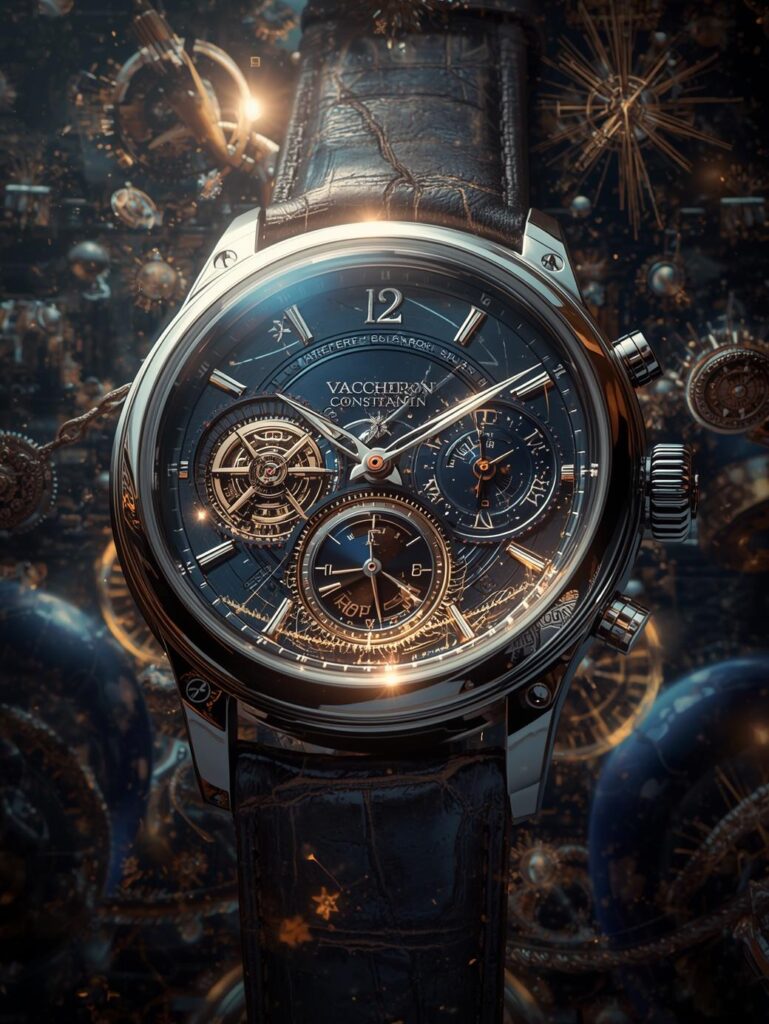
Few watchmakers can claim a history as long and uninterrupted as Vacheron Constantin. Founded in Geneva in 1755, it holds the distinction of being the world’s oldest watch manufacturer with continuous production. For nearly three centuries, the maison has remained committed to creating exceptional mechanical timepieces that combine artistic beauty with technical excellence.
Throughout its history, Vacheron Constantin has supplied watches to royalty, world leaders, influential collectors, and some of history’s wealthiest families. Rather than chasing trends, the company has built its reputation on patience, refinement, and an uncompromising dedication to traditional craftsmanship.
One of the brand’s defining characteristics is the extraordinary level of hand-finishing applied to every movement. Bridges are polished by hand, screw heads are mirror-finished, edges receive delicate anglage, and even components hidden from view are decorated to the same meticulous standard. This philosophy reflects true haute horlogerie — where perfection matters even in places the owner may never see.
Among its most celebrated collections are: – Overseas; – Patrimony; – Traditionnelle; – Historiques; – Égérie; – Fiftysix.
The Overseas collection has become one of the world’s most desirable luxury sports watches. Offering interchangeable straps, outstanding finishing, and refined elegance, it successfully competes with other legendary integrated-bracelet sports watches while maintaining a unique identity. Collectors often admire the Patrimony collection for its minimalist approach. Inspired by the clean aesthetics of the 1950s, these watches demonstrate that true luxury doesn’t require excessive decoration. Perfect proportions, flawless finishing, and elegant simplicity make them timeless.
One remarkable achievement is the Reference 57260, unveiled in 2015. Containing 57 complications and more than 2,800 individual components, it was the most complicated mechanical watch ever created at the time. The project required approximately eight years of research and craftsmanship, proving that Vacheron Constantin remains at the forefront of technical innovation.
The brand is also recognized for meeting the demanding standards of the Hallmark of Geneva, a prestigious certification that evaluates not only precision but also movement architecture, finishing quality, and manufacturing excellence.
Unlike many luxury brands that produce larger numbers of watches each year, Vacheron Constantin intentionally maintains relatively limited production. This exclusivity enhances collector interest and helps preserve the long-term value of its finest creations. Perhaps what makes Vacheron Constantin especially fascinating is its ability to balance history with innovation. While every watch reflects centuries of traditional craftsmanship, the brand continuously develops advanced complications, ultra-thin calibers, and modern engineering solutions without compromising its classical identity.
Audemars Piguet
2. Audemars Piguet – Innovation Meets Prestige
Among the great names of Swiss watchmaking, Audemars Piguet occupies a unique position. Founded in 1875 in Le Brassus, Switzerland, the company remains one of the few major luxury watch manufacturers still owned by its founding families. This independence has allowed it to make bold creative decisions that have permanently influenced the industry.
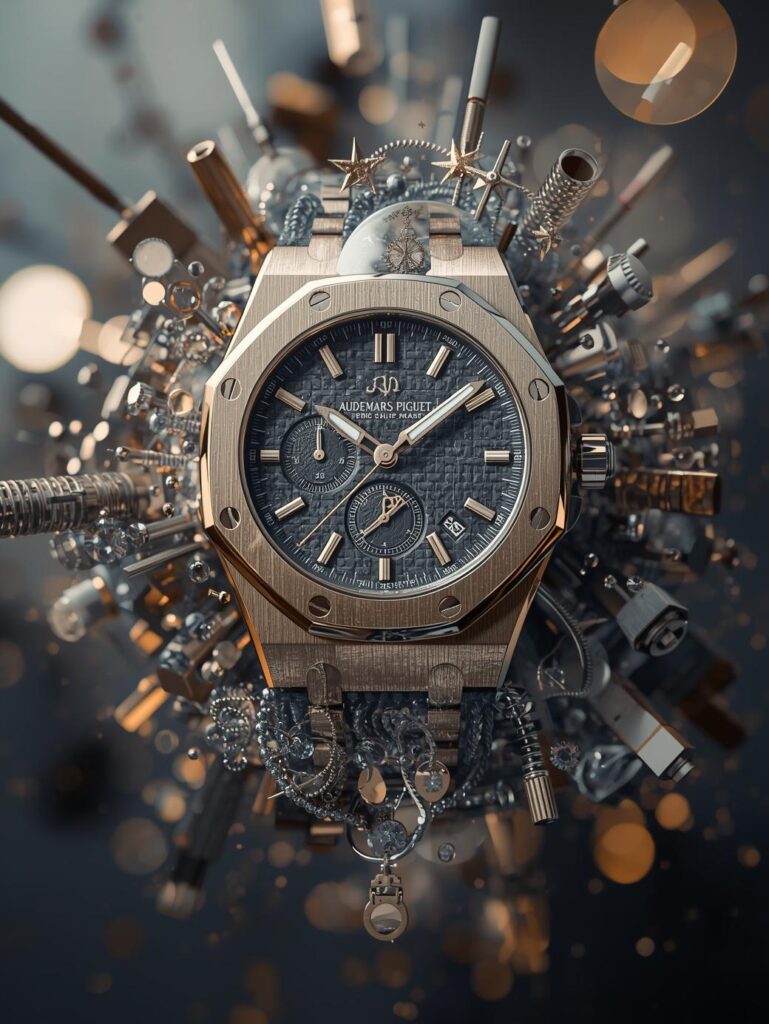
For decades, Audemars Piguet was respected primarily among serious collectors for producing complicated mechanical watches. Everything changed in 1972 with the introduction of the Royal Oak, designed by legendary watch designer Gérald Genta. At a time when luxury watches were almost exclusively crafted from precious metals, the Royal Oak challenged convention by introducing a premium stainless-steel sports watch with a revolutionary octagonal bezel secured by eight exposed screws and an integrated bracelet. Initially controversial, it eventually became one of the most influential watch designs ever created. Today, the Royal Oak is among the most recognizable luxury watches in the world, with demand consistently exceeding supply.
The brand’s flagship collections include: – Royal Oak; – Royal Oak Offshore; – Royal Oak Concept; – Code 11.59.
Beyond its iconic appearance, Audemars Piguet is renowned for extraordinary movement finishing and technical innovation. Many of its watches feature skeletonized movements, allowing owners to observe the intricate interaction of gears, bridges, and escapements through open-worked dials. The company has also pioneered the use of advanced materials, including forged carbon, ceramic, titanium, and innovative alloys that combine durability with lightweight performance.
One of the most impressive aspects of Audemars Piguet is its expertise in perpetual calendars. These remarkable complications automatically account for varying month lengths and leap years, requiring no manual adjustment until the year 2100 under normal operation. The Royal Oak Concept series showcases the brand’s willingness to experiment with futuristic engineering, incorporating shock-resistant movements, advanced materials, and highly architectural designs that push the boundaries of traditional watchmaking.
Limited editions frequently sell out before reaching boutiques, while discontinued references often appreciate dramatically on the secondary market. Certain Royal Oak models have multiplied several times in value within only a few years due to their scarcity and enduring popularity. Despite its modern image, every Audemars Piguet movement continues to receive meticulous hand-finishing by skilled artisans. This combination of avant-garde design and centuries-old craftsmanship has helped the brand remain one of the most respected names in contemporary haute horlogerie.
Patek Philippe
1. Patek Philippe – The King of Haute Horology
If one name consistently represents the absolute pinnacle of luxury watchmaking, it is Patek Philippe. Established in 1839, the Geneva-based manufacturer has spent nearly two centuries producing some of the world’s finest mechanical timepieces. Unlike companies that prioritize production volume, Patek Philippe focuses on quality above all else. Annual output remains relatively limited, ensuring that every watch receives exceptional attention from master craftsmen.
The brand has developed more than one hundred patented innovations throughout its history, many of which have significantly advanced mechanical watchmaking. Its expertise extends across perpetual calendars, minute repeaters, split-second chronographs, celestial displays, and some of the most sophisticated grand complications ever produced.
Among its most celebrated collections are: – Nautilus; – Aquanaut; – Calatrava; – Grand Complications; – Complications; – Twenty~4.
The Nautilus, introduced in 1976, has become one of the most sought-after luxury sports watches in existence. Characterized by its porthole-inspired case and integrated bracelet, demand consistently exceeds production, with waiting lists often lasting many years. Meanwhile, the Calatrava remains a benchmark for elegant dress watches. Its restrained design proves that true luxury often lies in perfect proportions, flawless execution, and timeless aesthetics rather than unnecessary complexity.
Patek Philippe is perhaps best known for producing some of the most valuable watches ever sold at auction. The Grandmaster Chime Ref. 6300A-010 achieved an astonishing price of over $31 million, making it one of the most expensive wristwatches ever sold. Equally famous is the company’s philosophy of creating watches that last for generations. Its iconic advertising campaign captures this idea perfectly: “You never actually own a Patek Philippe. You merely look after it for the next generation.” This message reflects the reality that many Patek Philippe watches remain within the same families for decades, becoming treasured heirlooms rather than disposable luxury goods. Every movement is hand-finished to extraordinary standards, with polished bevels, Geneva stripes, perlage, and perfectly finished components visible beneath sapphire crystal casebacks. Even the smallest details receive meticulous attention, reflecting the brand’s pursuit of absolute perfection.
Collectors often consider owning a Patek Philippe to be the culmination of a lifetime of appreciation for fine watchmaking. Few brands command greater respect among enthusiasts, auction houses, and master watchmakers alike.
Final Thoughts
The world’s most expensive watch brands share far more than premium price tags. They represent centuries of accumulated knowledge, artistic mastery, and engineering excellence that cannot be replicated overnight.
Rolex perfected reliability and universal recognition.
A. Lange & Söhne elevated German precision and hand craftsmanship to extraordinary levels.
Vacheron Constantin preserved nearly three centuries of uninterrupted horological tradition while continually pushing technical boundaries.
Audemars Piguet transformed the luxury sports watch into a global icon through fearless innovation.
Patek Philippe continues to define the highest standard of mechanical watchmaking, creating heirlooms designed to outlive their original owners.
Perhaps the most surprising fact is that the true value of these watches isn’t determined solely by gold, diamonds, or precious materials. In many cases, the most expensive component is something money alone cannot buy: thousands of hours of human expertise, generations of inherited craftsmanship, and a legacy built over centuries.
Long after trends fade and technology evolves, these exceptional timepieces continue to remind us that genuine luxury is measured not by excess, but by permanence, precision, and the relentless pursuit of perfection.
Every Legendary Watch Tells a Story Beyond Time
The extraordinary watch brands you’ve just explored are far more than makers of luxury timepieces — they are creators of history, innovation, and timeless craftsmanship.
From centuries-old Swiss ateliers to the world’s most exclusive watchmakers, these brands have perfected the art of combining precision engineering with exceptional design. Their rarest creations are admired not only for their beauty but also for their heritage, limited production, and enduring value, making them treasured by collectors across generations. But here’s the truth…
The world of haute horology is only one chapter in the story of luxury. Beyond these legendary watches lies a fascinating universe of iconic jewelry, prestigious perfume houses, collector automobiles, extraordinary estates, and once-in-a-lifetime experiences that define the highest level of refined living.
Because the greatest luxury timepieces don’t simply measure time — they preserve craftsmanship, celebrate heritage, and become part of history. Stay with us and discover more iconic brands, extraordinary collectibles, and luxury lifestyles that celebrate the finest craftsmanship and timeless elegance from around the world.