New York City has long been recognized as the birthplace of the modern skyscraper. Rising above bustling streets, historic neighborhoods, and world-famous landmarks, the city’s tallest buildings represent more than engineering achievements — they symbolize ambition, innovation, and economic power. From the elegant Art Deco masterpieces of the early twentieth century to the ultra-slender residential towers transforming Billionaires’ Row, every generation has added a new chapter to Manhattan’s ever-changing skyline.
Today’s tallest buildings combine cutting-edge engineering with sustainable technologies, luxury amenities, world-class office space, and unforgettable observation decks. Millions of visitors admire these towers every year, while businesses and residents occupy some of the most valuable real estate on Earth.
In this guide, we’ll explore the ten highest buildings in New York City, ranked by architectural height. You’ll discover fascinating facts about their construction, architectural styles, engineering innovations, and why each tower has become an iconic part of one of the world’s most recognizable skylines.
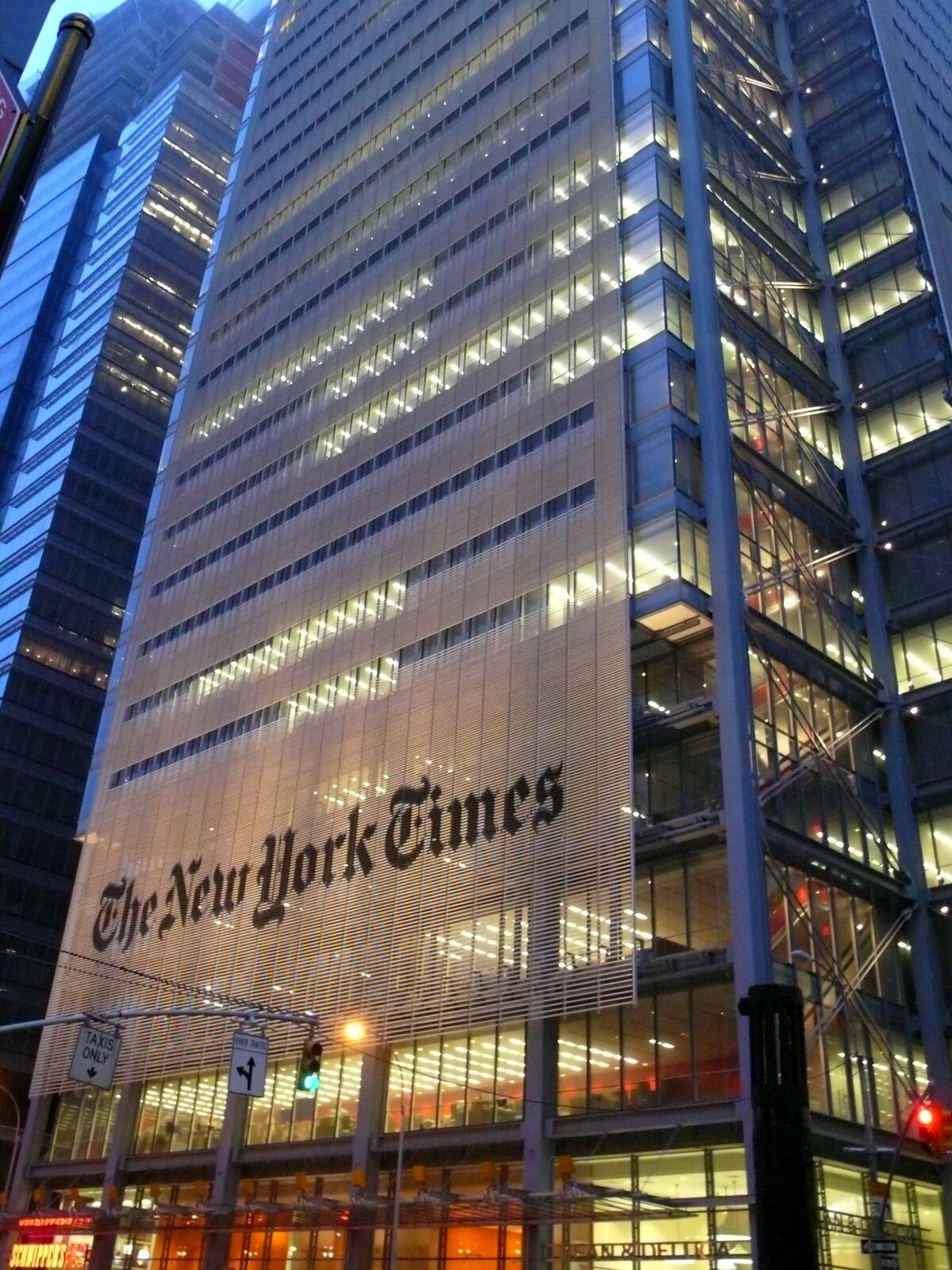
New York Times Building
10. New York Times Building
Height: 1,046 ft (319 m) Floors: 52 Completed: 2007 Architect: Renzo Piano Building Workshop with FXCollaborative
Located in Midtown Manhattan, the New York Times Building stands as one of the city’s finest examples of modern sustainable architecture. Serving as the headquarters of The New York Times, the tower reflects transparency, openness, and innovation through its distinctive glass façade and elegant ceramic rod screen. Unlike many skyscrapers that emphasize visual dominance, Renzo Piano designed this building to maximize natural daylight while reducing solar heat gain. More than 180,000 ceramic rods wrap around the exterior, filtering sunlight and creating a constantly changing appearance depending on the weather and time of day.
Inside, expansive open office layouts encourage collaboration while offering panoramic views across Manhattan. The building incorporates numerous environmentally conscious features, including energy-efficient lighting systems, automated shading, water conservation technologies, and advanced climate controls that were considered groundbreaking at the time of construction. The tower also includes a dramatic multi-story lobby filled with natural light and public art installations, reinforcing the newspaper’s long-standing connection to civic life.
Although it isn’t among New York’s tallest skyscrapers today, the New York Times Building represents an important shift toward environmentally responsible high-rise construction. It demonstrated that commercial office towers could achieve both architectural elegance and impressive sustainability performance without sacrificing functionality.
Interesting Fact: The ceramic curtain surrounding the tower creates a soft, almost shimmering appearance that changes throughout the day, making the building appear lighter than its true size.
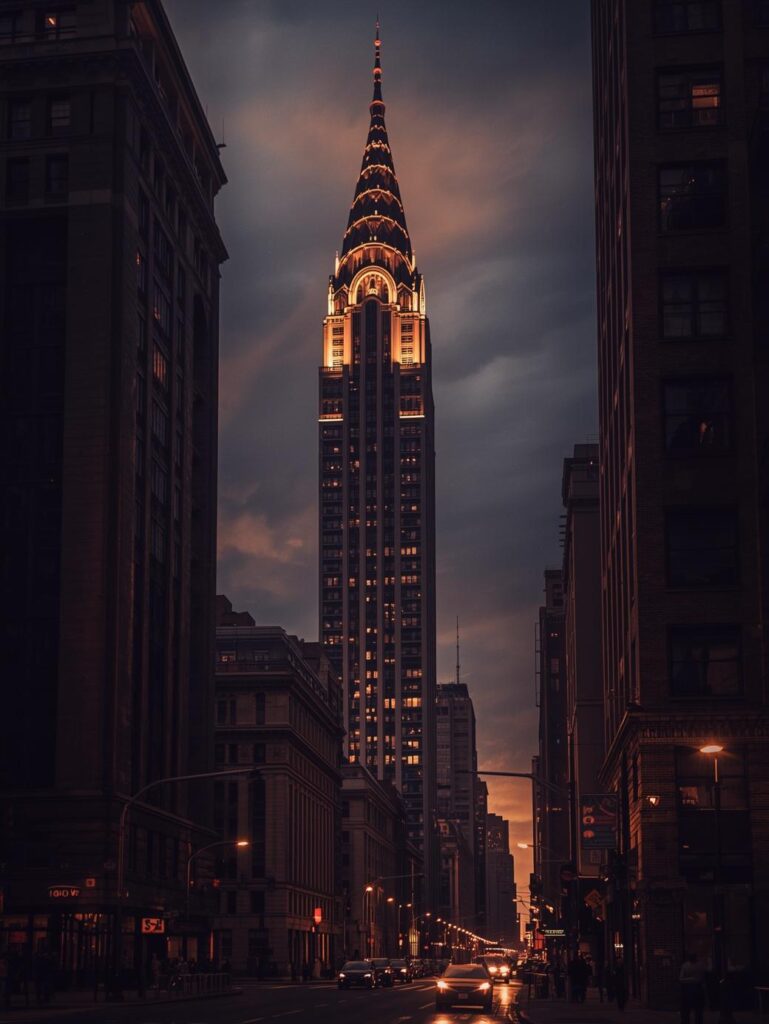
9. Chrysler Building
Height: 1,046 ft (319 m) Floors: 77 Completed: 1930 Architect: William Van Alen
Few skyscrapers anywhere in the world possess the timeless elegance of the Chrysler Building. Completed during New York’s legendary skyscraper race of the late 1920s, it briefly became the tallest building on Earth before being surpassed by the Empire State Building less than a year later. Commissioned by automobile magnate Walter P. Chrysler, the tower remains one of the greatest examples of Art Deco architecture ever created. Its stainless steel crown, triangular windows, and gleaming sunburst design have become defining symbols of New York City. The building incorporates numerous decorative elements inspired by Chrysler automobiles. Eagle gargoyles resemble hood ornaments from Chrysler vehicles of the era, while radiator cap motifs and wheel-inspired decorations celebrate the company’s automotive heritage.
Perhaps the building’s most famous story involves its hidden spire. During construction, architect William Van Alen secretly assembled a 185-foot stainless steel spire inside the building before dramatically raising it through the roof in just 90 minutes. This unexpected move allowed the Chrysler Building to surpass its rival at 40 Wall Street and briefly claim the title of the world’s tallest building. Although modern supertall towers now dwarf its height, the Chrysler Building remains one of the most photographed skyscrapers on the planet. Its illuminated crown continues to dominate the Midtown skyline every evening, reminding visitors of New York’s golden age of skyscraper construction.
Interesting Fact: Many architects consider the Chrysler Building — not the tallest tower — the most beautiful skyscraper ever built.
Chrysler Building
Bank of America Tower
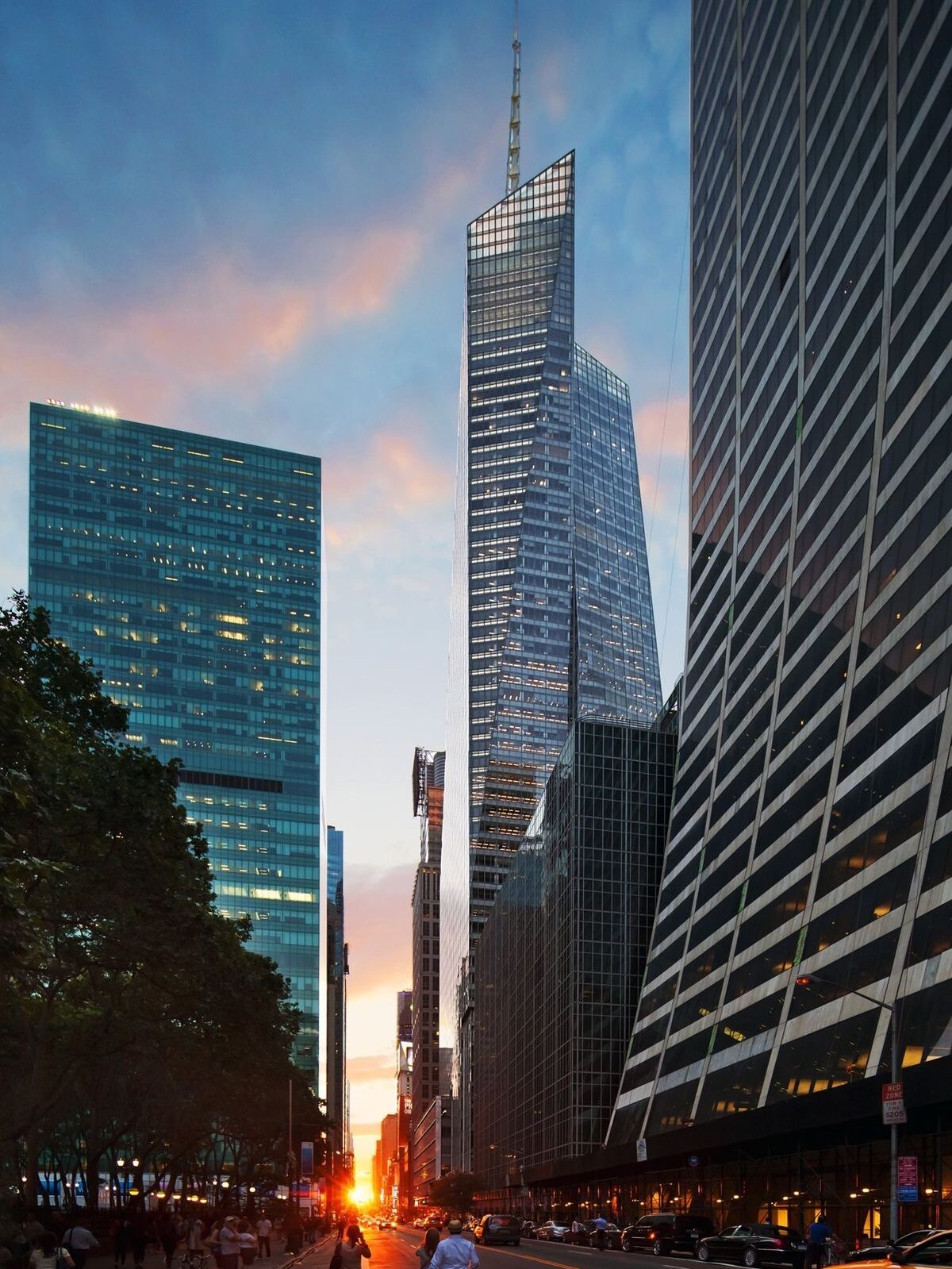
8. Bank of America Tower
Height: 1,200 ft (366 m) Floors: 55 Completed: 2009 Architect: COOKFOX Architects
Standing adjacent to Bryant Park, the Bank of America Tower showcases how sustainability and high-performance engineering can coexist in a modern supertall office building. When completed in 2009, it became one of the greenest skyscrapers ever constructed. Designed with environmental responsibility as a primary objective, the tower achieved LEED Platinum certification and introduced technologies that influenced commercial skyscraper development around the world.
One of its most innovative features is an advanced cogeneration system that generates a significant portion of the building’s electricity on-site while simultaneously producing heating and cooling energy. Rainwater harvesting systems collect precipitation for reuse throughout the building, reducing overall water consumption. The tower also utilizes floor-to-ceiling insulated glass, daylight optimization, and sophisticated air filtration systems that improve indoor air quality while minimizing energy use.
Architecturally, the building features a crystalline glass exterior with sharp angles that create a dynamic profile against the Manhattan skyline. At night, its illuminated spire enhances Midtown’s recognizable silhouette. The tower provides premium office space for global financial firms while offering sweeping views of Bryant Park, Times Square, and the Hudson River.
Interesting Fact: More than half of the building’s construction materials came from recycled sources, making it a landmark achievement in environmentally conscious skyscraper design.
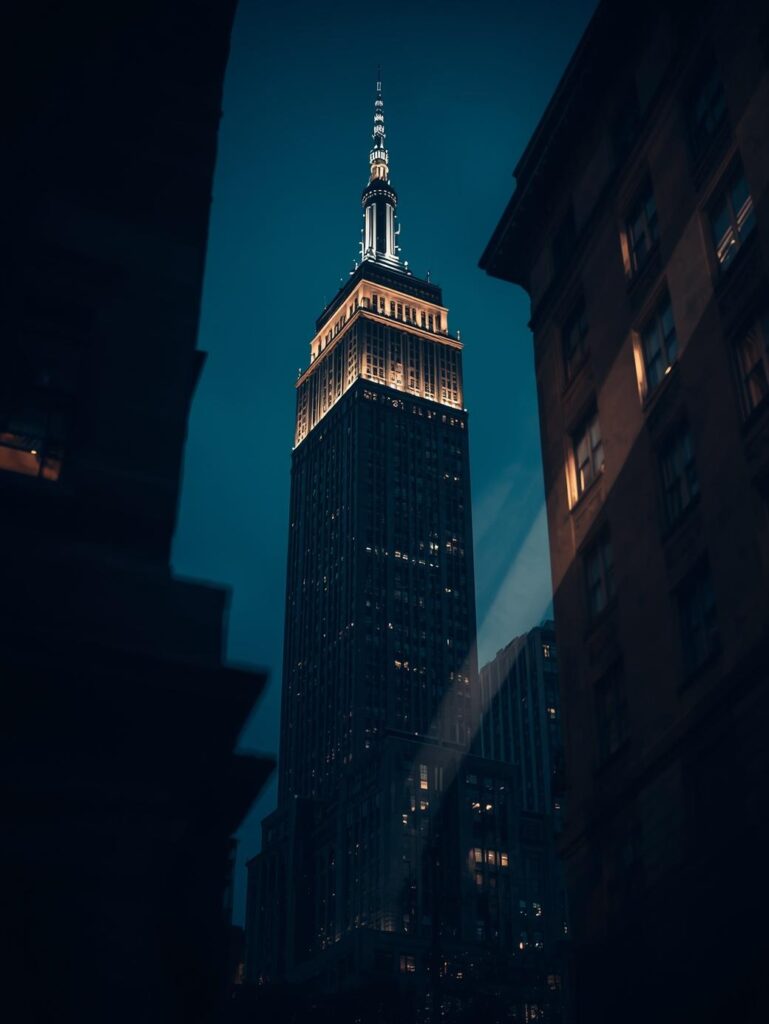
7. Empire State Building
Height: 1,250 ft (381 m) Height with antenna: 1,454 ft (443 m) Floors: 102 Completed: 1931 Architect: Shreve, Lamb & Harmon
No skyscraper has shaped New York City’s identity more profoundly than the Empire State Building. For nearly forty years after its completion, it held the title of the tallest building in the world and quickly became one of the most recognizable landmarks ever constructed. Built during the Great Depression, the project demonstrated extraordinary efficiency. Construction crews completed the 102-story tower in just over one year, an astonishing achievement considering the technology available at the time.
The Empire State Building combines elegant Art Deco architecture with remarkable structural engineering. Its steel frame contains tens of thousands of tons of structural steel, while limestone and granite give the exterior its timeless appearance. The building became deeply embedded in popular culture after appearing in countless films, television series, and photographs. Perhaps most famously, it served as the setting for the legendary climax of King Kong (1933), forever cementing its place in cinematic history.
Today, visitors can experience two world-famous observation decks located on the 86th and 102nd floors. These platforms offer breathtaking panoramic views stretching across Manhattan, Brooklyn, Queens, New Jersey, and beyond on clear days. Modern renovations have transformed the building into one of the world’s most energy-efficient historic skyscrapers. Extensive upgrades to windows, insulation, elevators, and climate systems have dramatically reduced energy consumption while preserving its historic character. The Empire State Building also features programmable LED lighting capable of displaying thousands of color combinations to celebrate holidays, charitable causes, sporting events, and major international occasions.
Interesting Fact: During peak construction, workers completed as many as four and a half floors every week—an astonishing pace that remains impressive even by today’s standards.
Empire State Building
30 Hudson Yards
6. 30 Hudson Yards
Height: 1,296 ft (395 m) Floors: 73 Completed: 2019 Architect: Kohn Pedersen Fox (KPF)
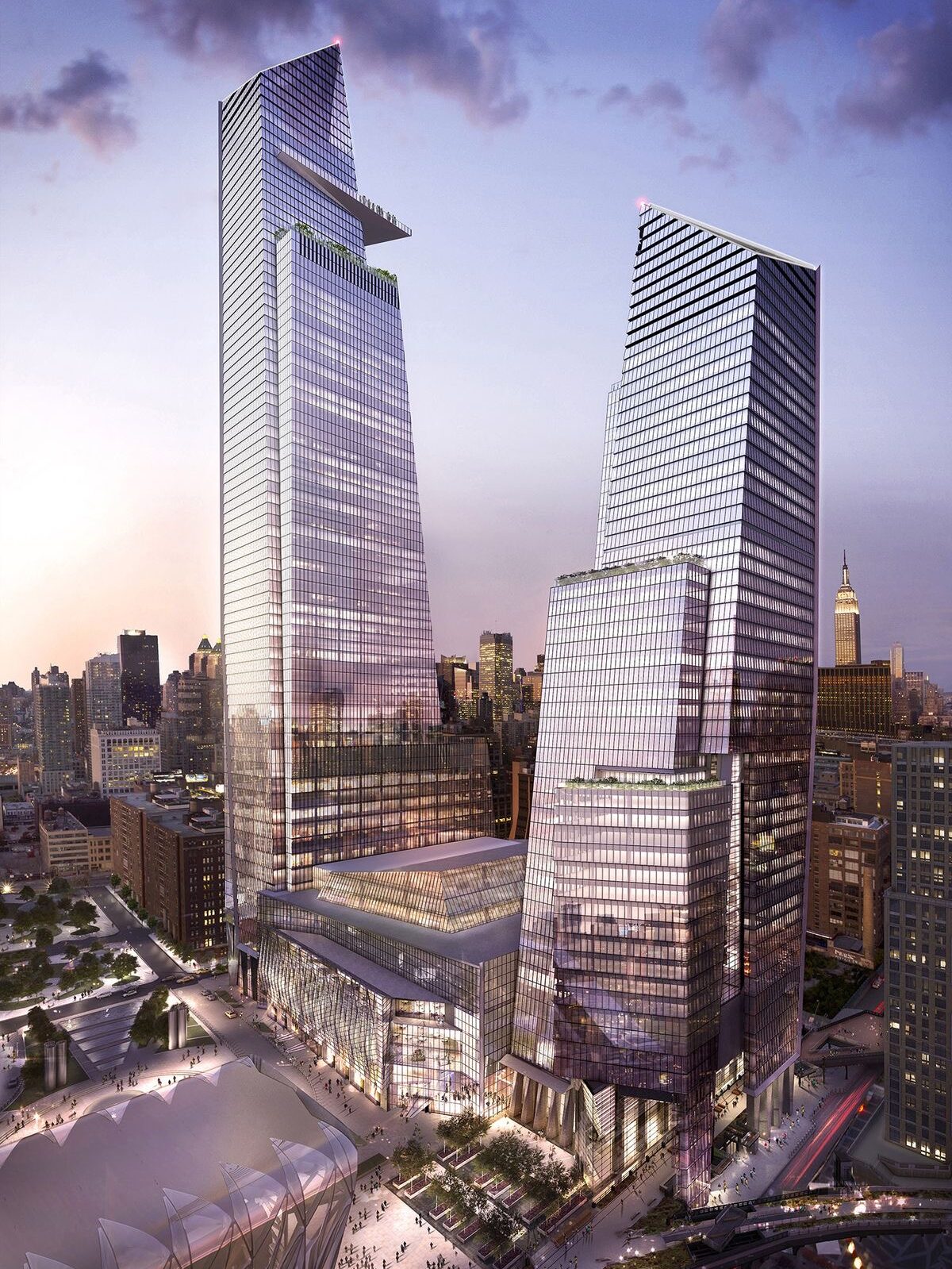
As the centerpiece of the Hudson Yards redevelopment project, 30 Hudson Yards represents a new era of Manhattan’s westward expansion. Rising above former rail yards, the tower demonstrates how large-scale urban redevelopment can transform underutilized land into one of the world’s premier business districts. The skyscraper serves as headquarters for several multinational companies and offers nearly four million square feet of premium office space. Its sleek glass curtain wall reflects the Hudson River while maximizing natural light throughout the interior.
What truly distinguishes 30 Hudson Yards is Edge, the highest outdoor sky deck in the Western Hemisphere. Suspended more than 1,100 feet above the streets of Manhattan, Edge extends outward from the building, creating the thrilling sensation of floating above the city. A section of the observation deck even features a glass floor, allowing visitors to look directly down to the streets below.
The tower was engineered with exceptionally large column-free office floors, providing flexible workspaces for modern businesses. High-speed elevators, advanced energy management systems, and state-of-the-art safety technologies make it one of New York’s most sophisticated commercial skyscrapers. 30 Hudson Yards has also become a symbol of the city’s continued growth in the twenty-first century, helping redefine Manhattan’s skyline while anchoring an entirely new neighborhood filled with luxury residences, retail, restaurants, and cultural attractions.
Interesting Fact: The building’s observation deck attracts millions of visitors annually and has quickly become one of New York City’s most popular tourist destinations.
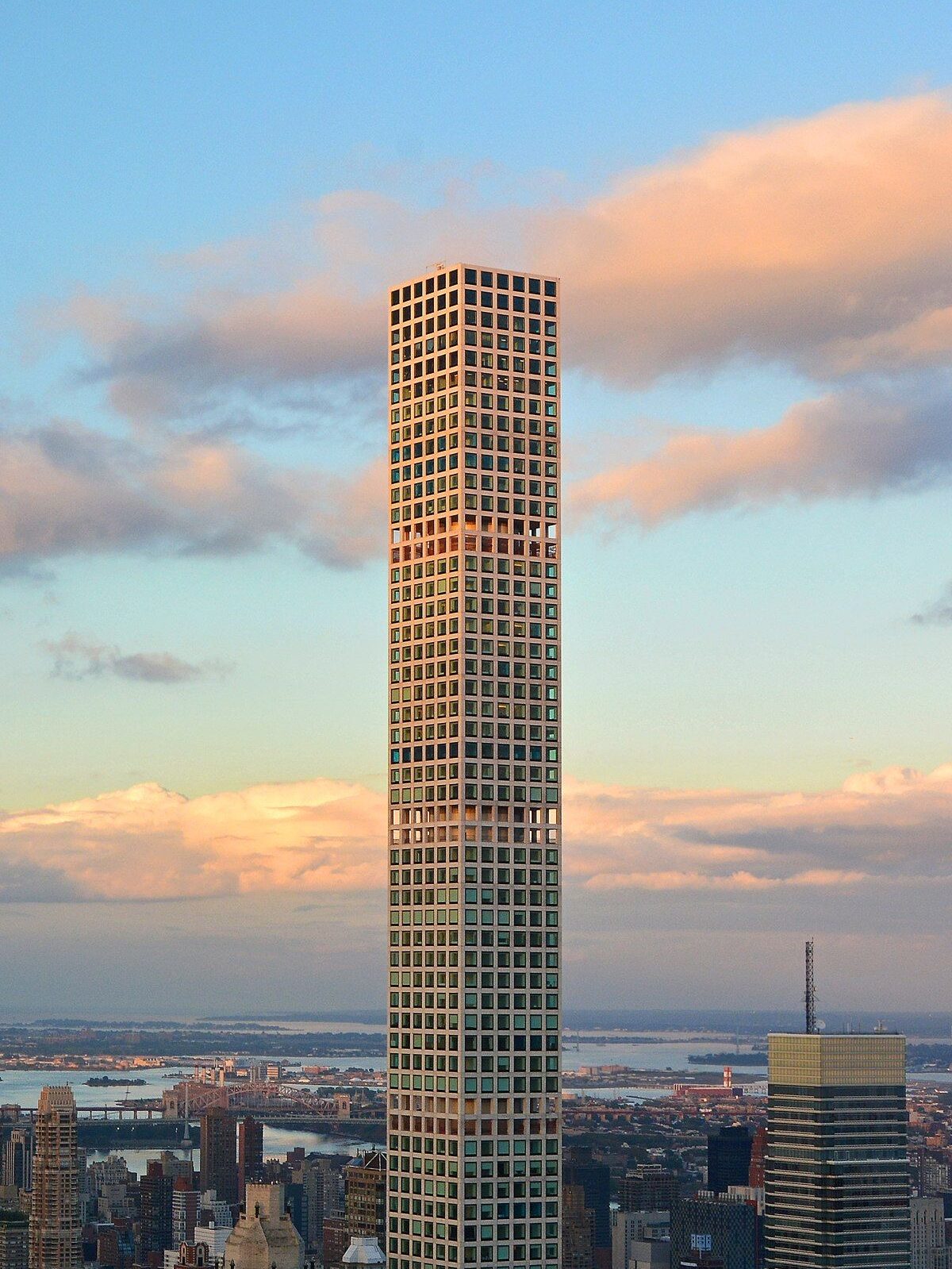
5. 432 Park Avenue
Height: 1,396 ft (426 m) Floors: 85 Completed: 2015 Architect: Rafael Viñoly Architects
Standing prominently along Billionaires’ Row, 432 Park Avenue is one of the most recognizable residential skyscrapers in the world. Its minimalist square profile, perfectly symmetrical windows, and extraordinary height have made it one of Manhattan’s defining modern landmarks. Unlike traditional residential towers, 432 Park Avenue follows a remarkably simple geometric design. Each side measures approximately 93 feet, creating an elegant, uniform appearance that contrasts sharply with the city’s more ornate skyscrapers.
Engineering such a slender tower presented enormous challenges. To reduce movement caused by powerful winds, engineers incorporated multiple mechanical floors that allow air to pass through the structure, significantly reducing wind pressure. Massive tuned mass dampers further stabilize the building, improving comfort for residents. The tower contains fewer than 150 luxury residences, many occupying entire floors with private elevator access. Floor-to-ceiling windows provide uninterrupted panoramic views of Central Park, the Atlantic Ocean, and neighboring states on exceptionally clear days.
Residents enjoy amenities including private dining rooms, spa facilities, fitness centers, swimming pools, wine cellars, concierge services, and exclusive lounges. These features have helped establish 432 Park Avenue as one of the world’s most prestigious residential addresses. Although the building has sparked debate over luxury housing and skyline aesthetics, it undeniably represents a remarkable engineering achievement and continues to influence supertall residential tower design worldwide.
Interesting Fact: Several penthouses have sold for tens of millions of dollars, making the tower one of the most valuable residential properties in the United States.
432 Park Avenue
One Vanderbilt
4. One Vanderbilt
Height: 1,401 ft (427 m) Floors: 73 Completed: 2020 Architect: Kohn Pedersen Fox (KPF)
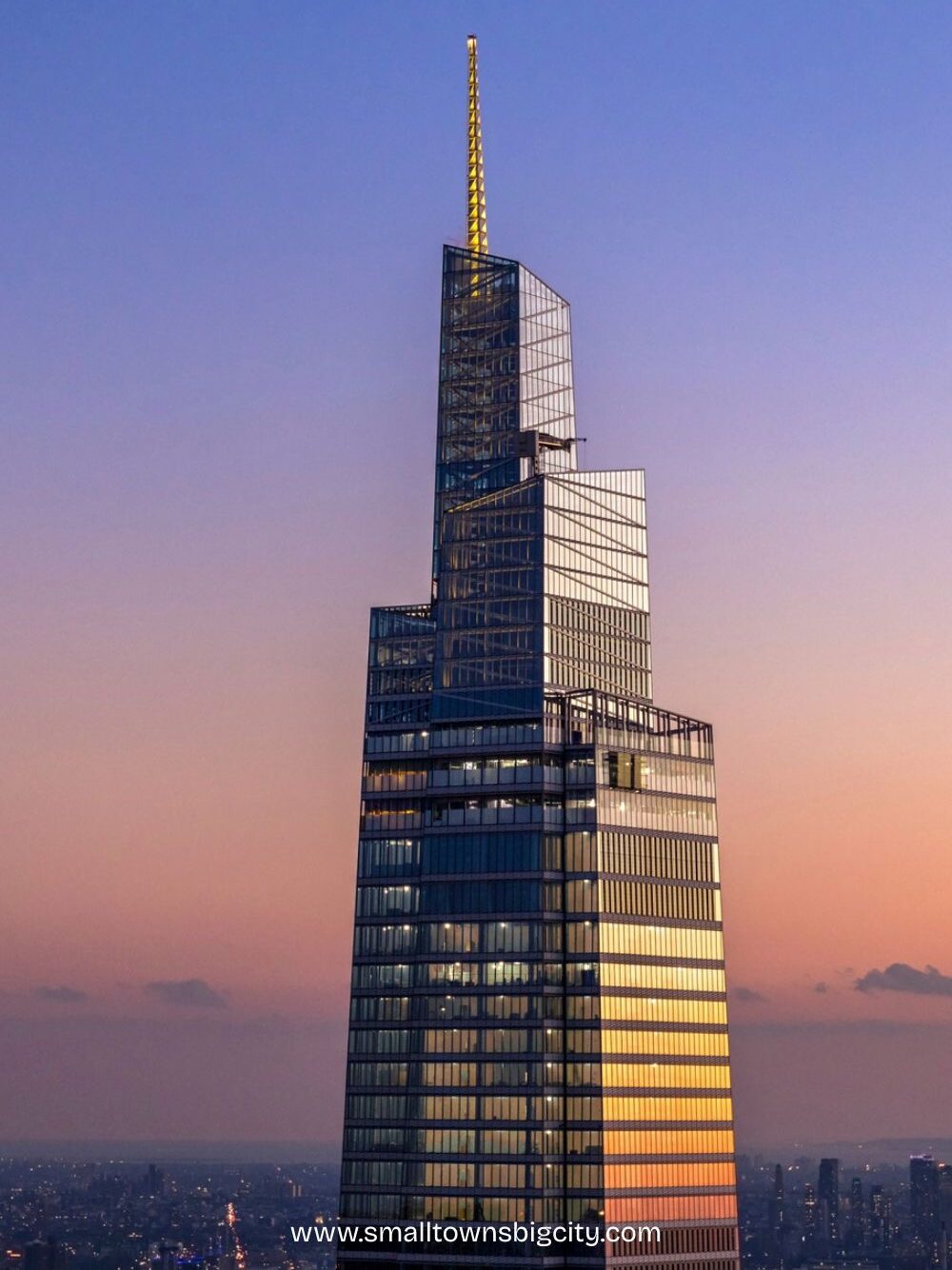
Located directly beside Grand Central Terminal, One Vanderbilt has rapidly become one of the city’s most important commercial skyscrapers. Designed to strengthen Midtown Manhattan’s position as a global business center, the tower combines elegant architecture with advanced transportation integration. Its faceted glass exterior reflects neighboring historic buildings while gradually tapering toward the crown, creating a sophisticated silhouette that complements the surrounding skyline rather than overpowering it.
One Vanderbilt is directly connected to Grand Central Terminal through significant transit improvements, making commuting easier for hundreds of thousands of passengers every day. This integration demonstrates how modern skyscrapers can improve both transportation infrastructure and urban mobility. The tower features some of New York’s most technologically advanced office environments, including energy-efficient mechanical systems, intelligent building management, enhanced air filtration, and expansive outdoor terraces.
Perhaps its most famous attraction is SUMMIT One Vanderbilt, an immersive observation experience unlike any other in New York. Combining mirrored rooms, interactive art installations, transparent glass ledges, and spectacular skyline views, SUMMIT has redefined what an observation deck can offer. The building’s emphasis on sustainability, connectivity, and visitor experiences illustrates the future direction of commercial skyscraper development.
Interesting Fact: SUMMIT One Vanderbilt combines architecture, technology, and immersive art, creating one of the city’s most unique attractions.
3. 111 West 57th Street (Steinway Tower)
Height: 1,428 ft (435 m) Floors: 84 Completed: 2021 Architect: SHoP Architects
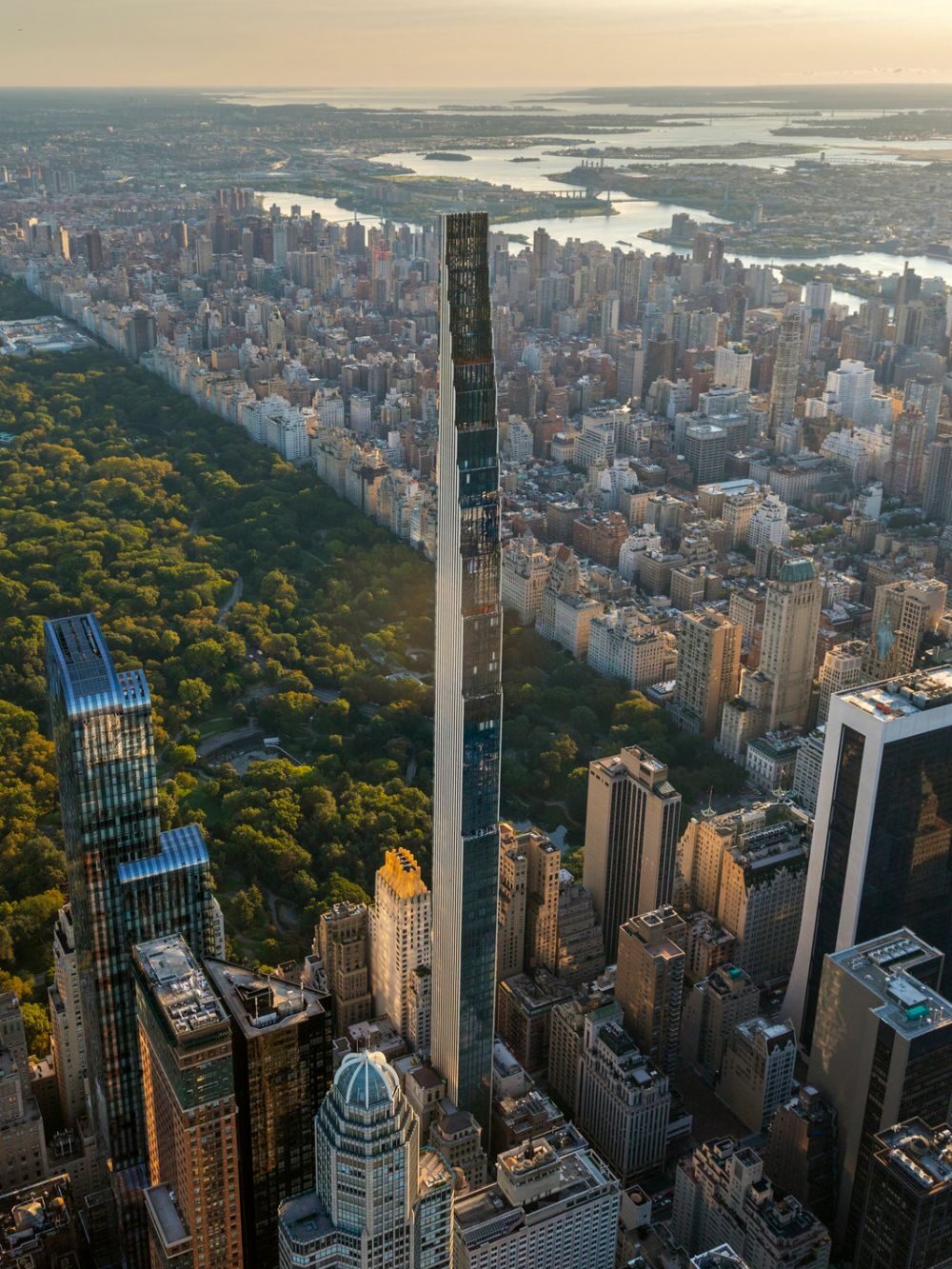
Known worldwide as Steinway Tower, 111 West 57th Street is one of the most extraordinary engineering achievements ever completed. It is widely recognized as the world’s slenderest skyscraper, with a height-to-width ratio of approximately 24:1. Built on the site of the historic Steinway Hall, the tower combines a restored landmark building with a breathtaking supertall residential structure. The design blends historic preservation with cutting-edge engineering in a way rarely seen anywhere in the world.
Constructing such an incredibly narrow tower required innovative structural solutions. Engineers developed an exceptionally strong reinforced concrete core, installed massive tuned mass dampers, and created highly specialized foundations capable of resisting powerful wind forces. The exterior features elegant terracotta detailing, bronze accents, and vertically emphasized architectural lines that evoke the grandeur of New York’s classic skyscrapers while embracing contemporary luxury.
Each residence occupies an enormous amount of space and offers spectacular views over Central Park and Manhattan. Interiors feature handcrafted finishes, premium natural materials, private elevators, and bespoke design details. Steinway Tower demonstrates how engineering innovation continues to push architectural boundaries, proving that even one of the world’s most densely developed cities can still redefine the limits of skyscraper construction.
Interesting Fact: Despite its incredible height, the tower occupies one of the narrowest building footprints of any supertall skyscraper ever constructed.
111 West 57th Street
Central Park Tower
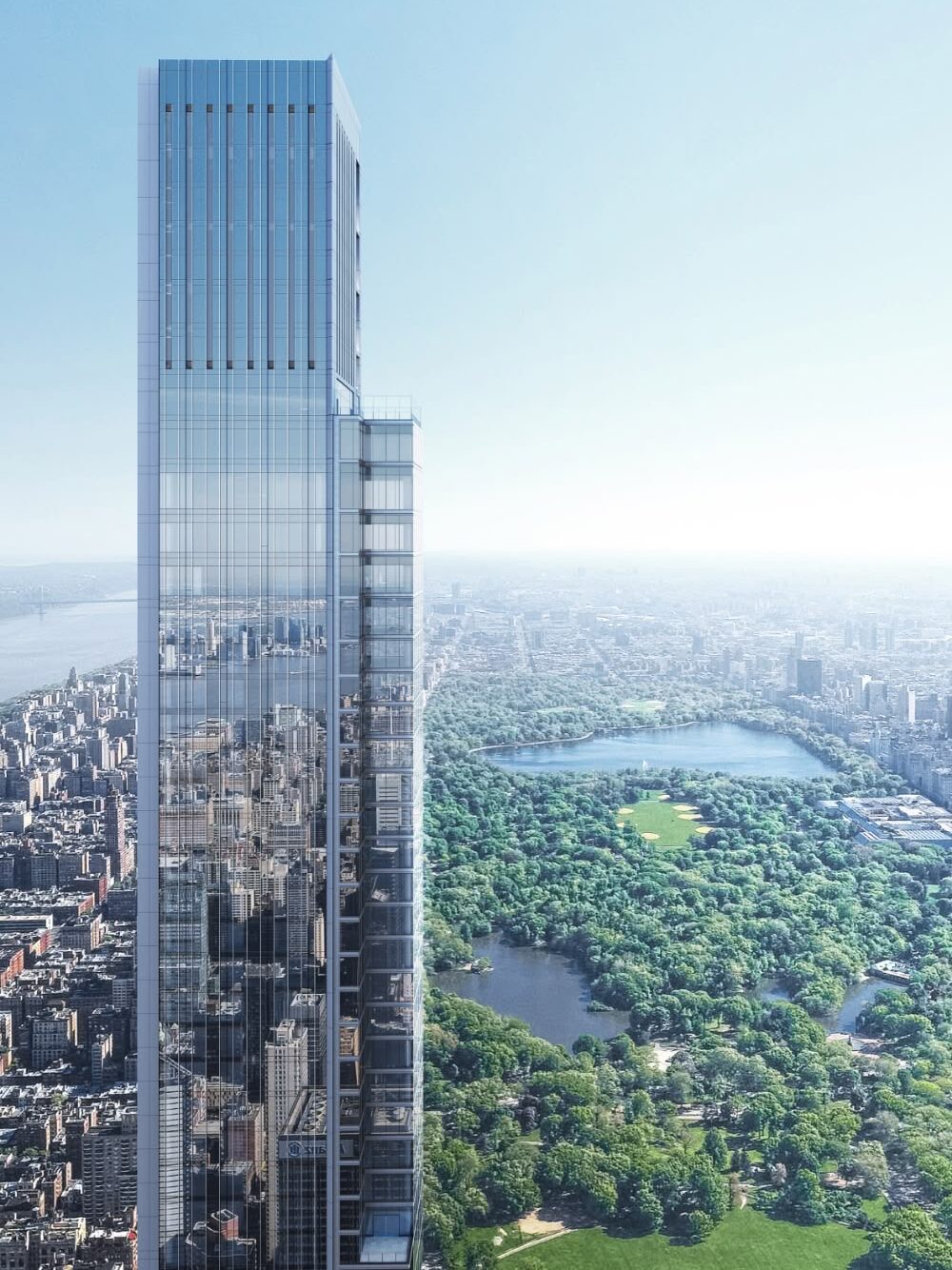
2. Central Park Tower
Height: 1,550 ft (472 m) Floors: 98 Completed: 2020 Architect: Adrian Smith + Gordon Gill Architecture
Central Park Tower currently holds the distinction of being the tallest residential building in the world. Rising above Billionaires’ Row, it dominates Midtown Manhattan while offering some of the highest luxury apartments ever built. Designed to maximize views of Central Park, the building features expansive floor-to-ceiling glass walls that flood residences with natural light. Many apartments provide breathtaking panoramic vistas extending for dozens of miles in every direction.
The tower contains an extraordinary collection of luxury amenities spread across multiple floors, including private lounges, wellness centers, indoor and outdoor swimming pools, entertainment spaces, fitness facilities, children’s play areas, screening rooms, and exclusive dining services. Its structural design required advanced engineering due to the combination of extreme height, slender proportions, and challenging wind conditions. Sophisticated damping systems reduce building movement, ensuring exceptional comfort for residents.
At its base sits one of New York’s premier luxury retail destinations, while the residential floors above cater to some of the world’s wealthiest homeowners. Central Park Tower perfectly illustrates how residential skyscrapers have evolved from simple apartment buildings into vertically integrated luxury communities offering every imaginable convenience.
Interesting Fact: Apartments in the tower rank among the most expensive residential properties ever sold in New York City.
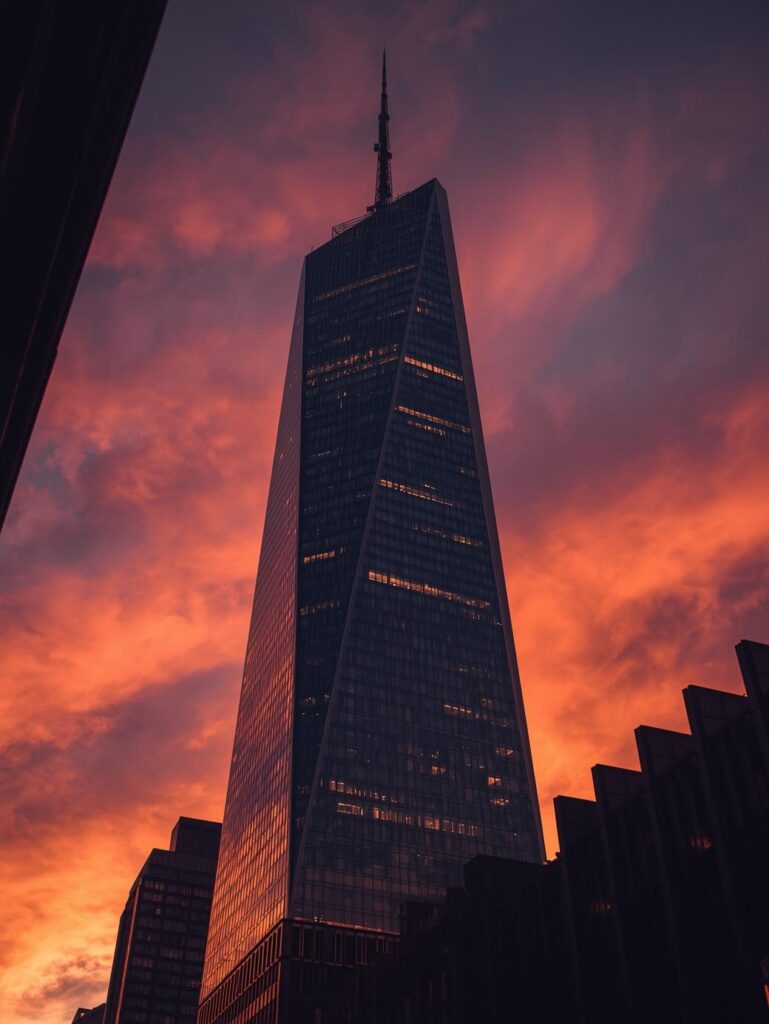
1. One World Trade Center
Height: 1,776 ft (541 m) Floors: 104 Completed: 2014 Architect: Skidmore, Owings & Merrill (David Childs)
Standing proudly in Lower Manhattan, One World Trade Center is the tallest building in New York City, the tallest building in the United States, and one of the tallest skyscrapers in the Western Hemisphere. Its symbolic height of 1,776 feet commemorates the year of American independence, making the building both an architectural achievement and a national symbol of resilience.
Constructed on the site of the original World Trade Center, the tower represents renewal following the tragic events of September 11, 2001. Its elegant form transitions from a square base into an eight-sided prism before culminating in a soaring spire that dominates the skyline. The building incorporates some of the world’s most advanced structural and security technologies. Reinforced concrete cores, enhanced fireproofing, redundant life-safety systems, and highly sophisticated engineering standards make it one of the safest skyscrapers ever built.
Inside, One World Trade Center houses premium office space for leading global companies while welcoming visitors to One World Observatory, located on floors 100 through 102. High-speed elevators transport guests to the top in under one minute while displaying a fascinating digital history of New York City’s skyline during the ascent. From the observation deck, visitors enjoy spectacular 360-degree views stretching across Manhattan, Brooklyn, Staten Island, New Jersey, and the Atlantic Ocean. Beyond its physical dimensions, One World Trade Center has become a global symbol of determination, innovation, and hope. It stands not only as New York City’s tallest building but also as a powerful reminder of the city’s ability to rebuild stronger than before.
Interesting Fact: The tower’s symbolic height of 1,776 feet was intentionally chosen to honor the signing of the United States Declaration of Independence in 1776.
One World Trade Center
Final Thoughts
New York City’s skyline is more than a collection of remarkable buildings — it’s a visual history of architectural ambition spanning over a century. From the timeless Art Deco elegance of the Chrysler Building and Empire State Building to engineering marvels like Steinway Tower, Central Park Tower, and One World Trade Center, each skyscraper reflects the era in which it was built while shaping the city’s future.
These towers are global symbols of innovation, resilience, luxury, and economic strength. Whether you’re admiring them from Central Park, cruising along the Hudson River, or viewing the skyline from an observation deck, New York’s tallest buildings continue to inspire millions of visitors every year.
As technology advances and architects push engineering boundaries even further, New York City’s skyline will undoubtedly continue evolving — yet these iconic skyscrapers will remain enduring symbols of one of the world’s greatest cities.
The Skyline Is Just the Beginning
The skyscrapers you’ve just explored are far more than engineering achievements — they are symbols of ambition, innovation, and the relentless pursuit of excellence.
Rising high above one of the world’s most iconic cities, these architectural masterpieces have transformed the New York skyline while becoming home to luxury residences, global headquarters, observation decks, and some of the most valuable real estate on Earth. Each tower tells a story of vision, determination, and the desire to build something that outlasts generations. But here’s the truth…
New York’s legendary skyline is only one part of the extraordinary world of luxury architecture. Beyond these soaring towers lies a universe of breathtaking penthouses, hidden estates, architectural masterpieces, and remarkable destinations where design, prestige, and innovation come together to create truly unforgettable places.
Because the greatest buildings don’t simply change a skyline — they change the way we imagine what’s possible. Stay with us and discover more iconic architecture, extraordinary properties, and luxury lifestyles that showcase the world’s most inspiring places to live, work, and dream.